ETP Plants and the machines behind them.
Our Effluent Treatment Plants (ETP) are engineered to treat industrial wastewater before it’s discharged or reused — removing suspended solids, oils, organic load and dissolved contaminants through a sequence of physical, chemical and biological stages. The right configuration depends on the effluent characteristics of your site, from textile and pharma units to food processing and manufacturing facilities.
Physico-Chemical ETP
Coagulation, flocculation and sedimentation remove suspended solids, oils and heavy metals through chemical dosing alone.
Best for · Metal & plating unitsBiological ETP
Activated sludge or MBBR-based biological treatment breaks down dissolved organic load using aerobic bacterial cultures.
Best for · Food & beverage unitsCombined Physico-Chemical + Biological
Chemical pre-treatment followed by biological polishing — the most common configuration for mixed industrial effluent.
Best for · Textile & pharma unitsZero Liquid Discharge (ZLD) ETP
Adds evaporation and crystallization stages so treated effluent is fully recovered, leaving no liquid discharge to environment.
Best for · High-TDS & CPCB-mandated sites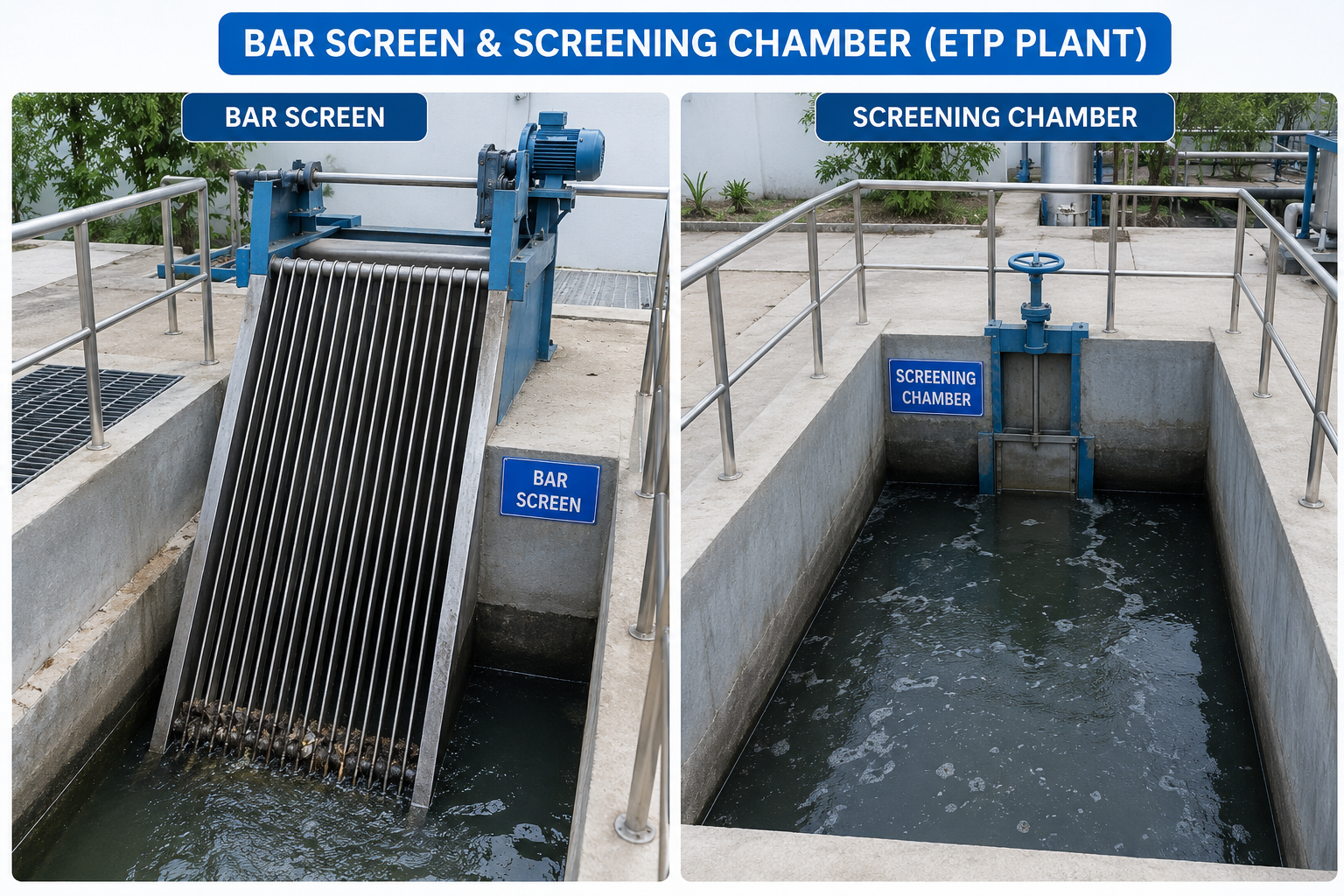
Bar Screen & Screening Chamber
Removes large solids, rags and debris from incoming effluent before it enters the treatment line.
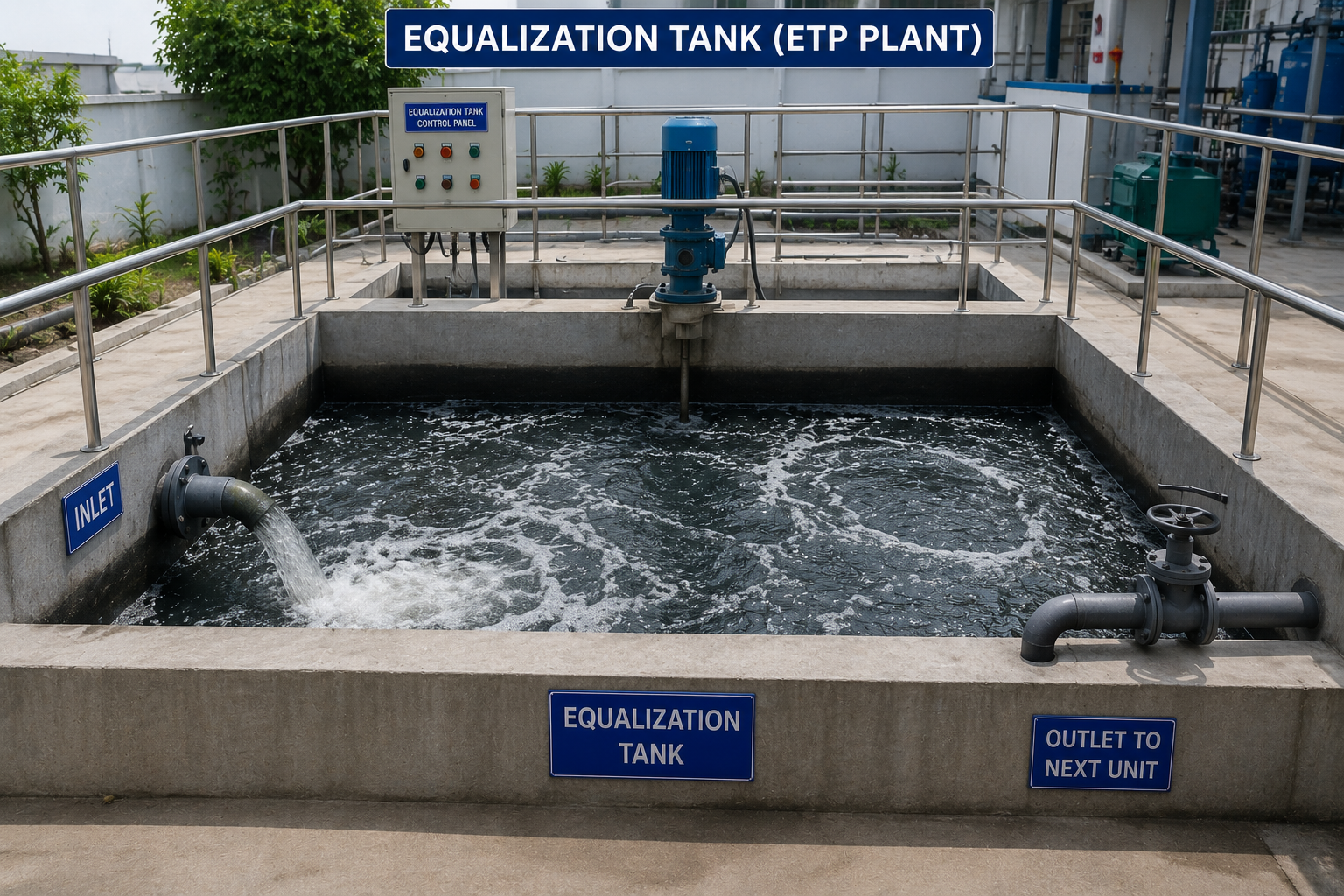
Equalization Tank & Aerators
Buffers fluctuations in flow rate and pollutant load, keeping downstream stages on a stable feed.
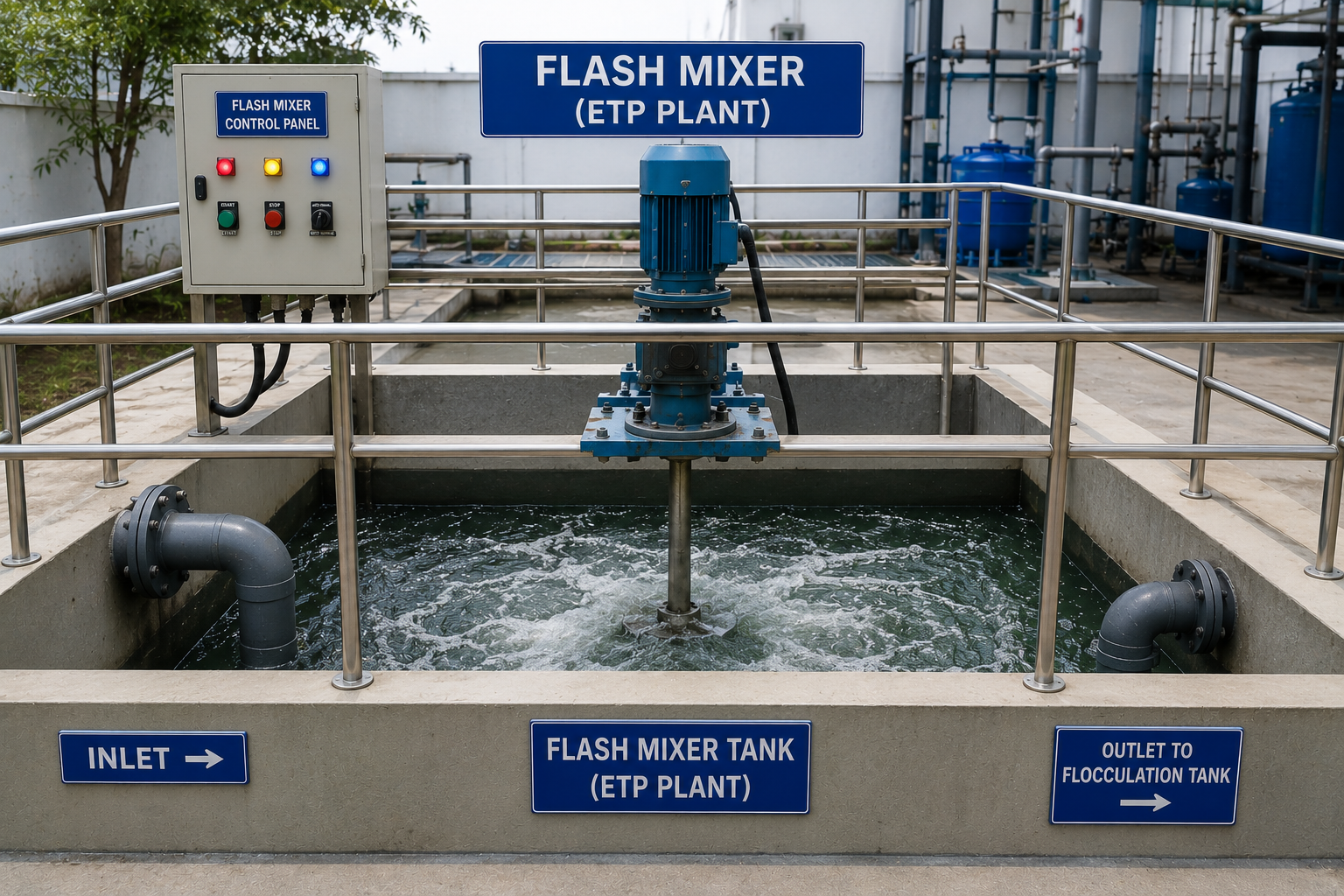
Flash Mixer & Flocculator
Doses coagulants and flocculants, binding fine suspended particles into settleable flocs.
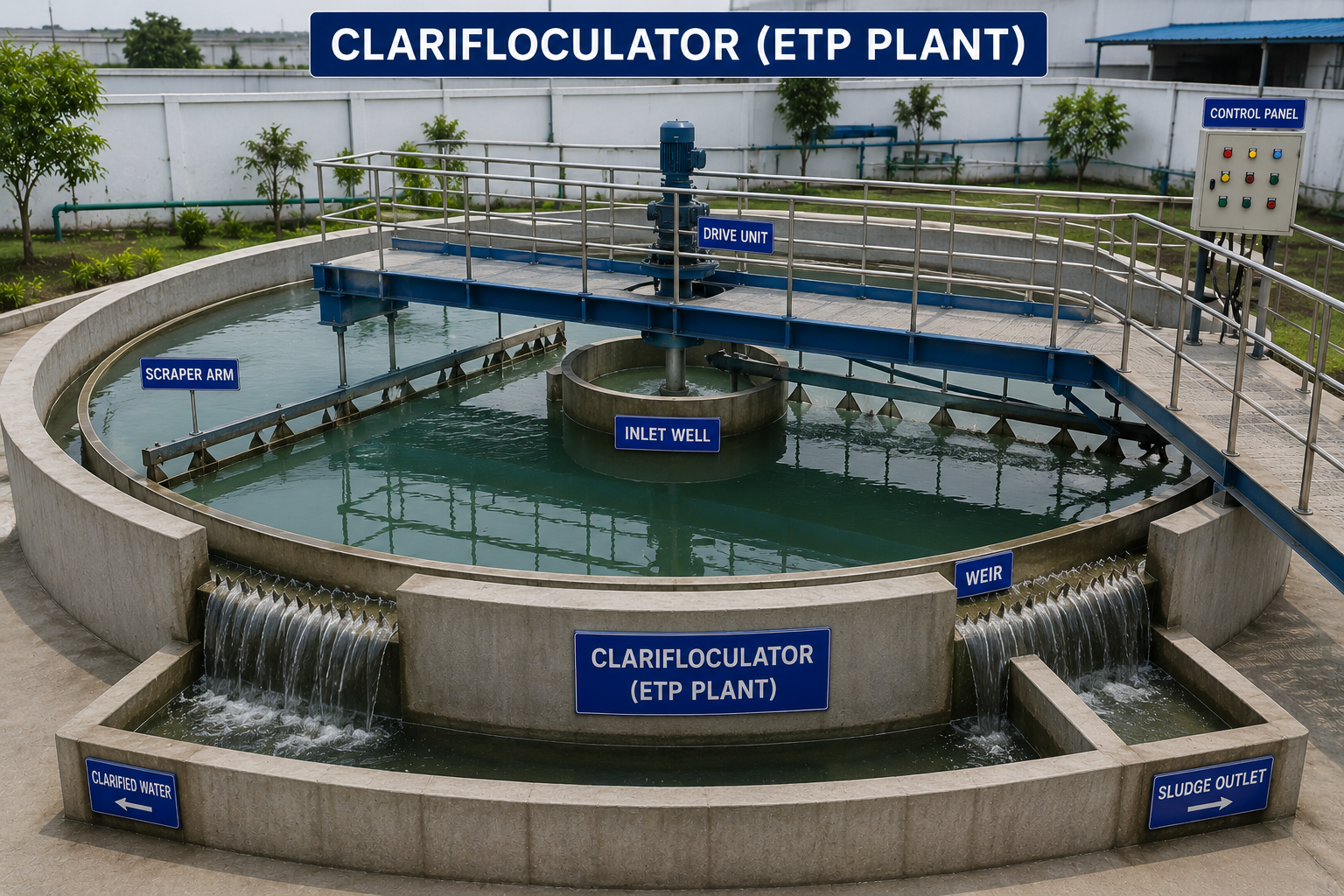
Clariflocculator
Combines flocculation and clarification in one unit, settling sludge for separate handling.
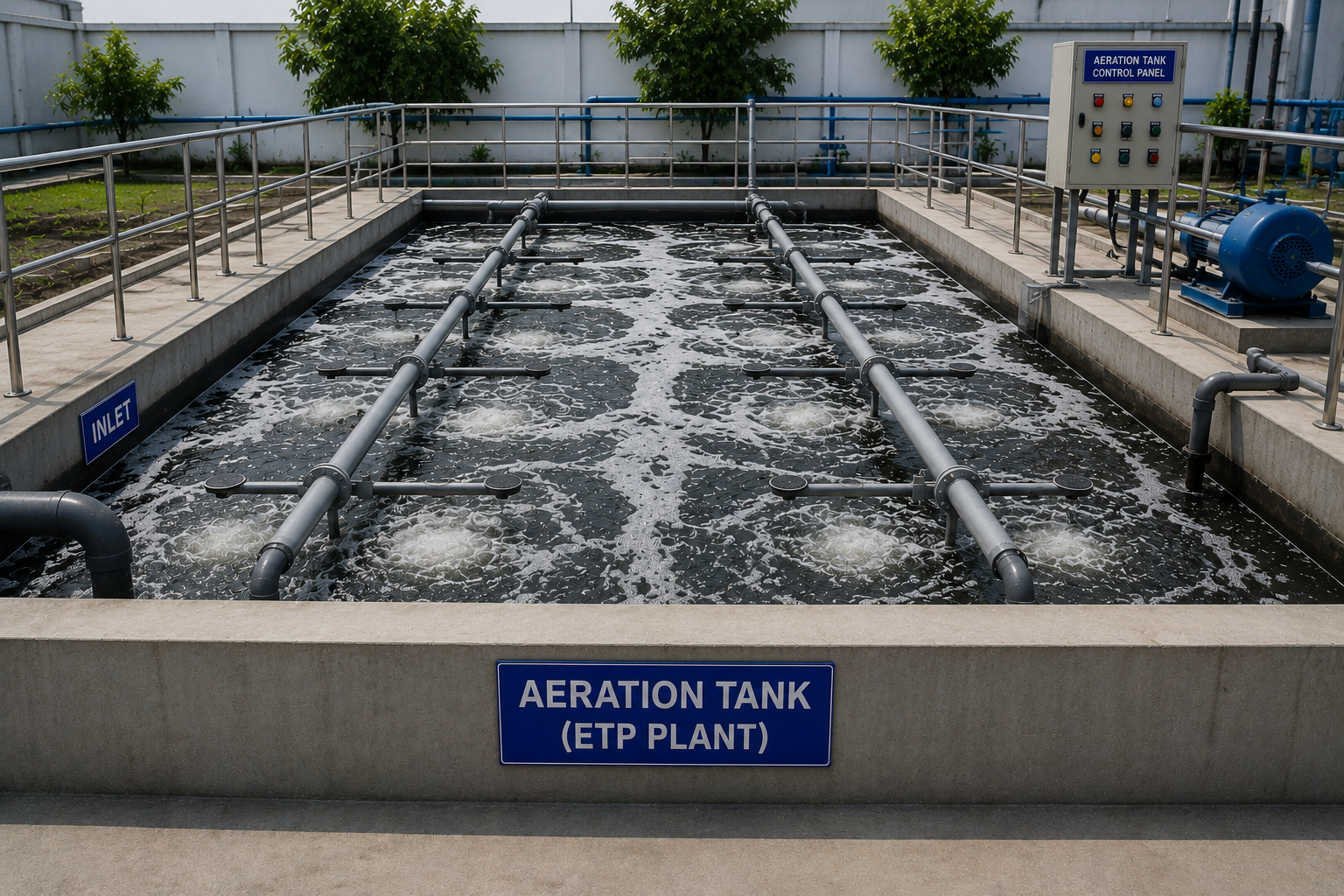
Aeration Tank & Diffused Blowers
Supplies dissolved oxygen for biological cultures to break down organic load in the effluent.
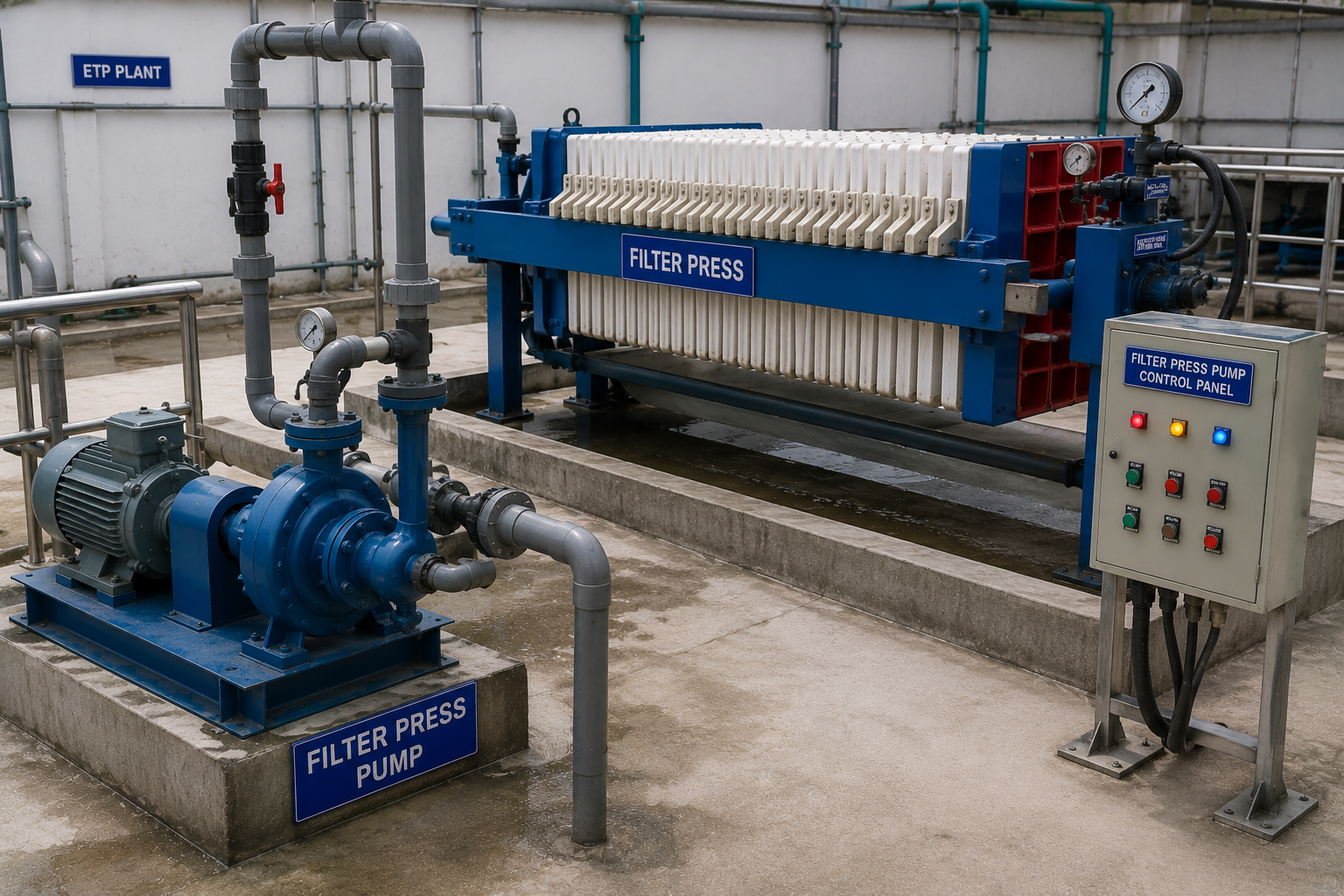
Filter Press / Sludge Drying Beds
Dewaters settled sludge into a manageable cake for safe handling and disposal.
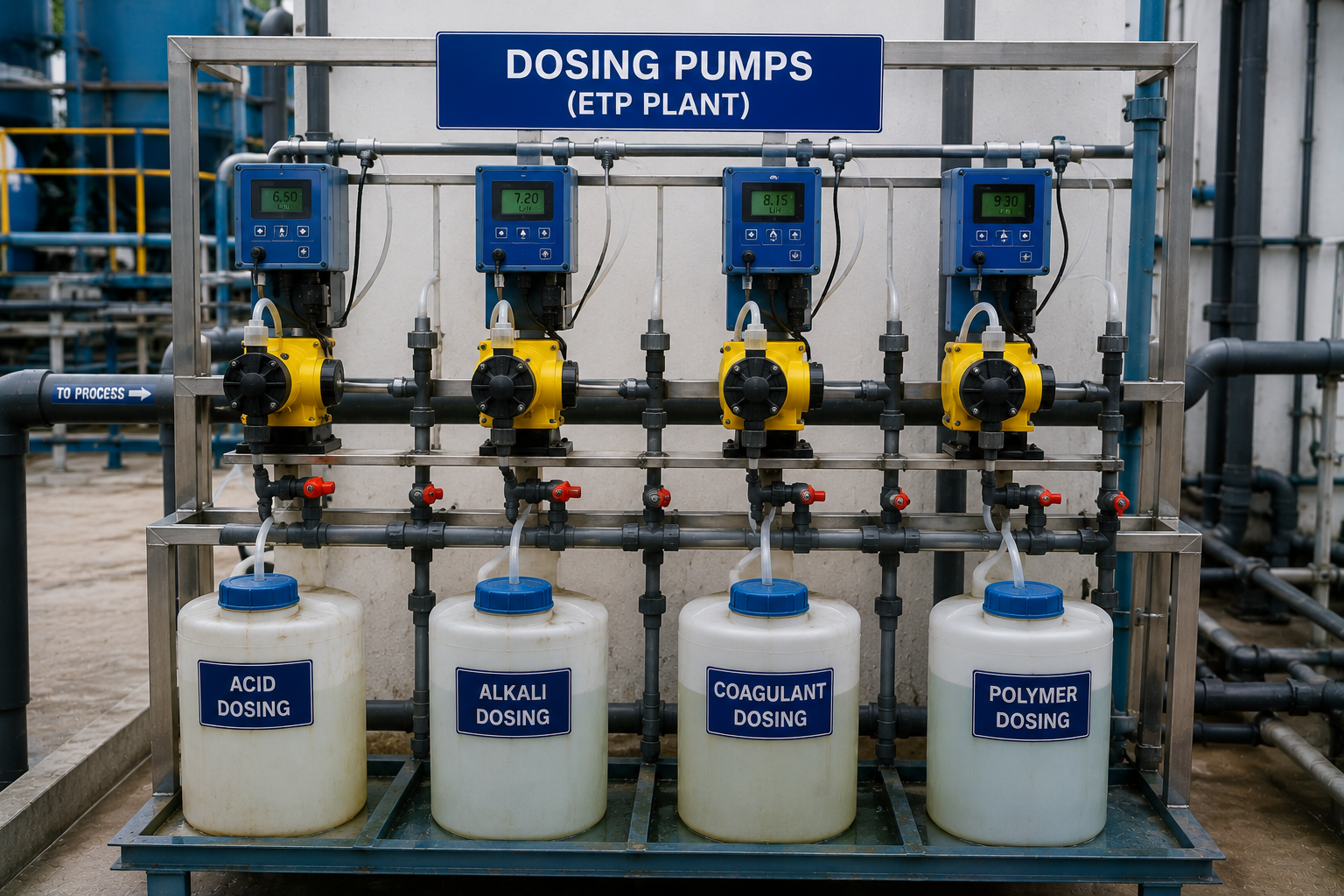
Chemical Dosing Pumps
Precisely meters coagulants, pH correctors and disinfectants at each stage of the process.
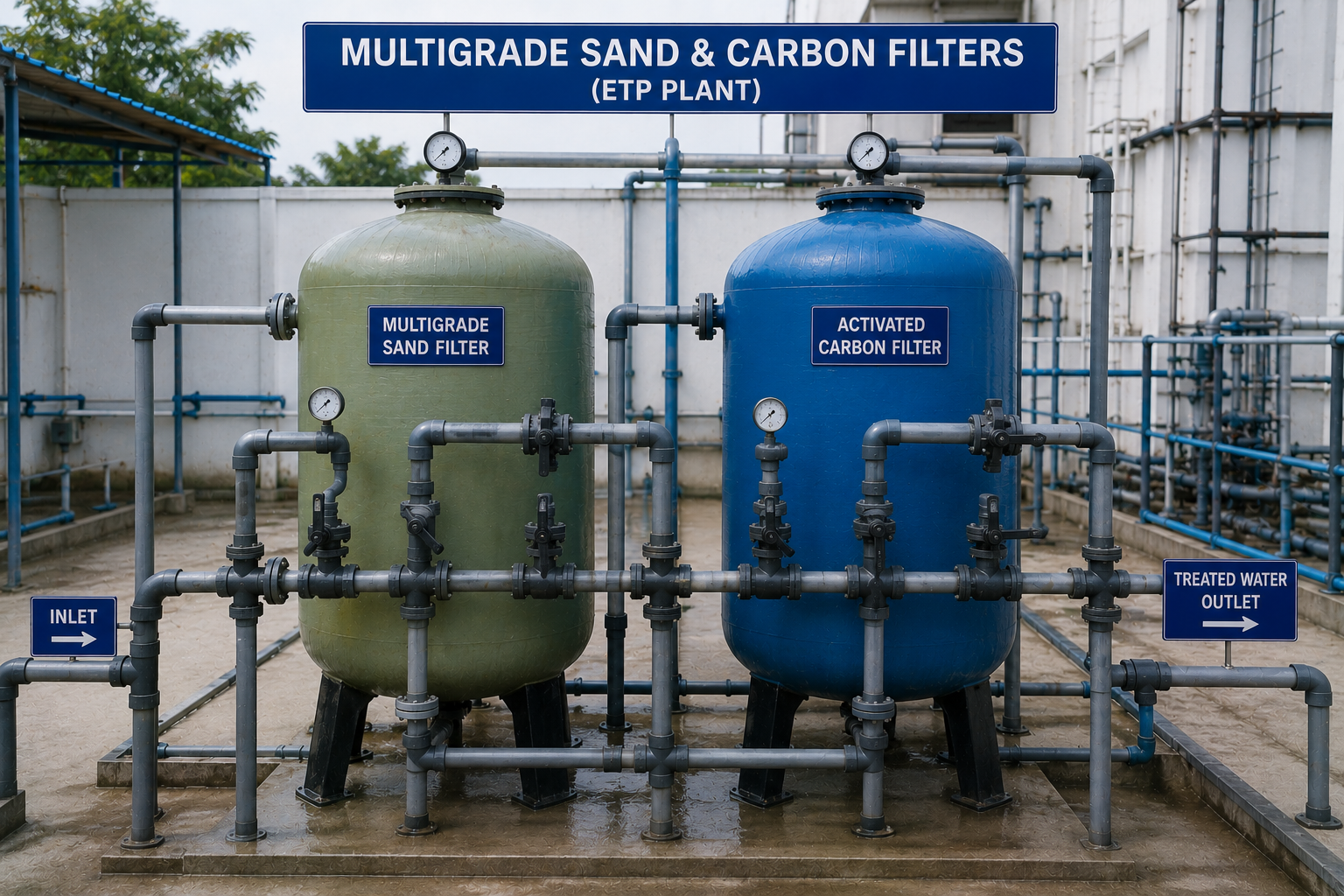
Multi-Grade Sand & Carbon Filters
Polishes treated water of residual turbidity, odour and colour before discharge or reuse.